Blocking My Buttonbox

036

Blocking your knitwear can really enhance your work by bringing out details and shaping.  It can also make your garment sit better when wearing.  Sometimes after knitting and sewing up I can be quite desperate to wear my work but will always try to block regardless.  Without exception all lace work should always be blocked to open up the stitches
037

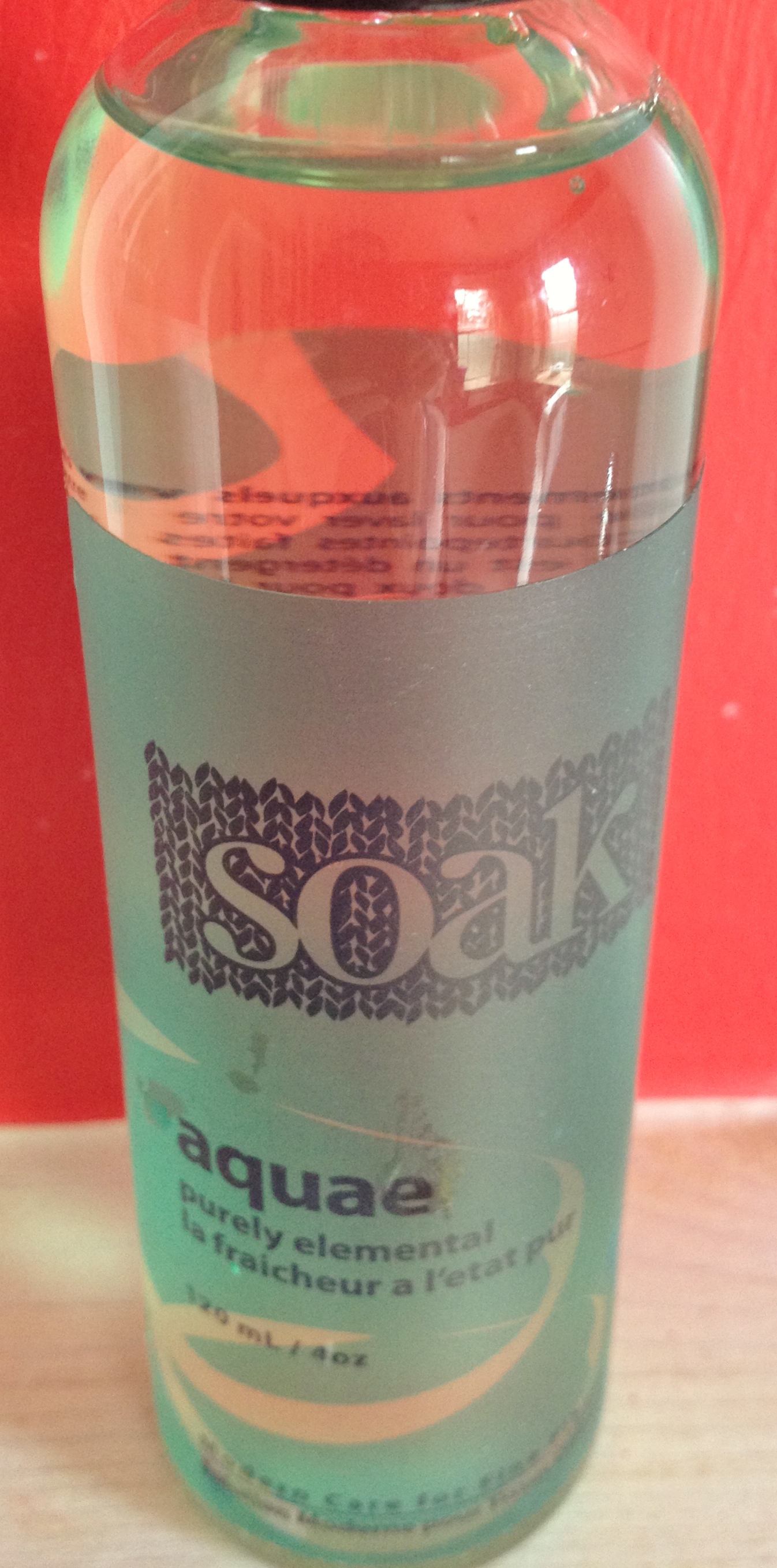
Most of the time after sewing in my ends I will wash my finished garment.  I tend to use Soak, a delicate washing liquid in which you quite literally ‘soak’ your clothes.  A sink full of cool water only needs a teaspoon of the washing detergent and you leave your garment submerged (soaking) for about 15 minutes.  You should always check whether or not your yarn is colourfast but in most cases I’d only be washing one garment at a time so it’s never really a problem.  The great thing about this washing liquid is that there is no need to rinse (yes, I did say no need).  If your using Woolite or something similar you will have to rinse your garment through at least three times to get rid of any detergent.

After soaking you should squeeze out any excess water remembering not to wring as you could stretch your hard work.  You can always place your work between towels and use pressure to extract more water (stand on it).  If I’m honest however, I tend to tie the garment tightly into a clean pillowcase and put it in my washing machine on the spin cycle.  You can control the intensity of spin on my machine which helps.

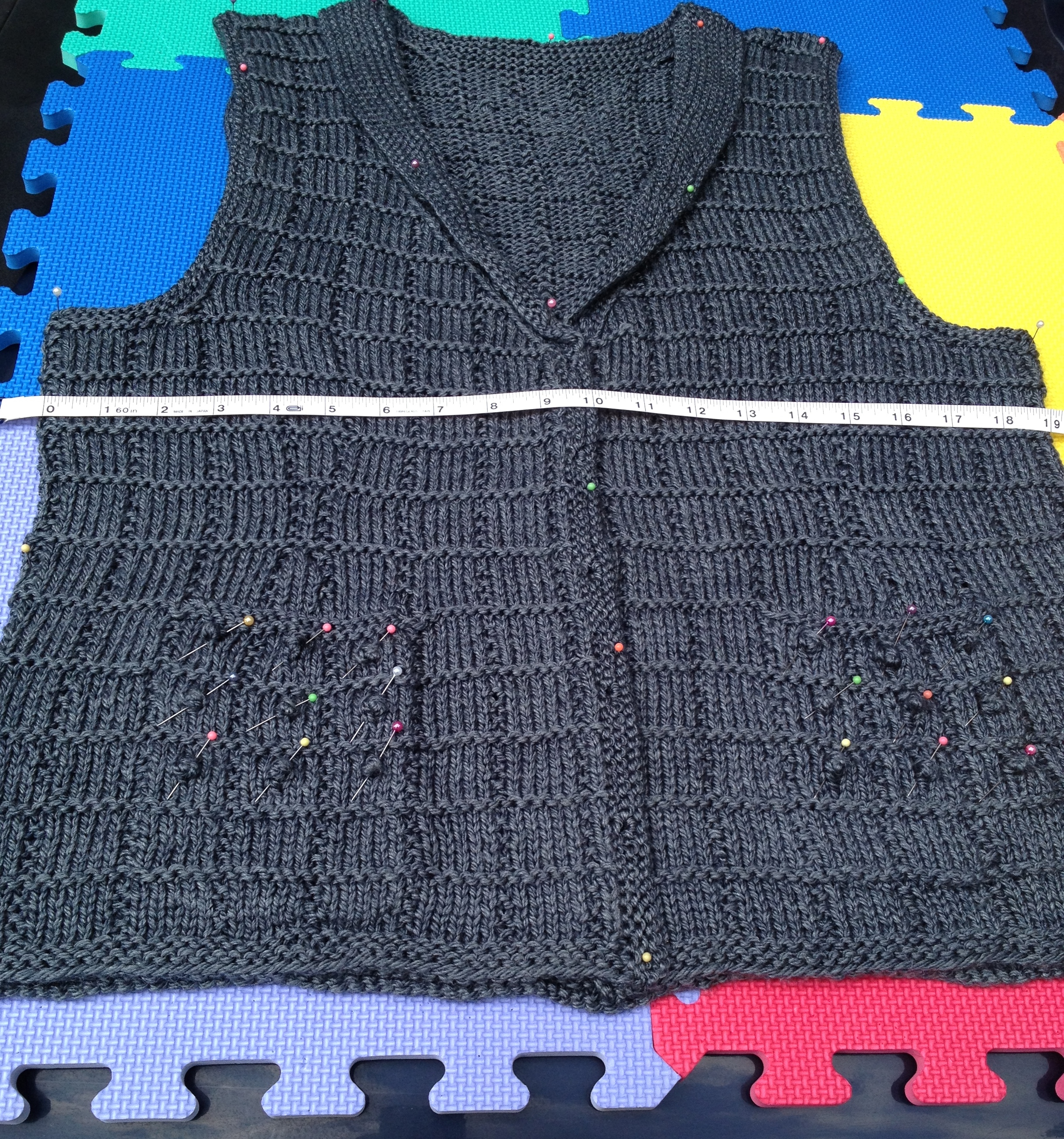
Once spun I pin the garment out to size on my childrens play mat using rust proof pins.  You can of course buy expensive blocking mats, they tend to be made of the same material as the mat I use but come complete with the measurements on them.

If you don’t have these mats you can use several old towels or maybe your ironing board for smaller projects.  The mats are easy to locate, I have 2 packs one of which was bought in Tesco whilst the other was bought in Smyths Toy Shop.
038

Use the actual measurements if available on your pattern.  My waistcoat is supposed to be blocked to 36″ around the chest, but after being washed the yarn has relaxed a little and it is coming up at 38″.  I’m happy with the extra roominess but would always advise you knit, wash and dry your tension square to ensure you knit the correct size.  Obviously, I didn’t do that here – oops!

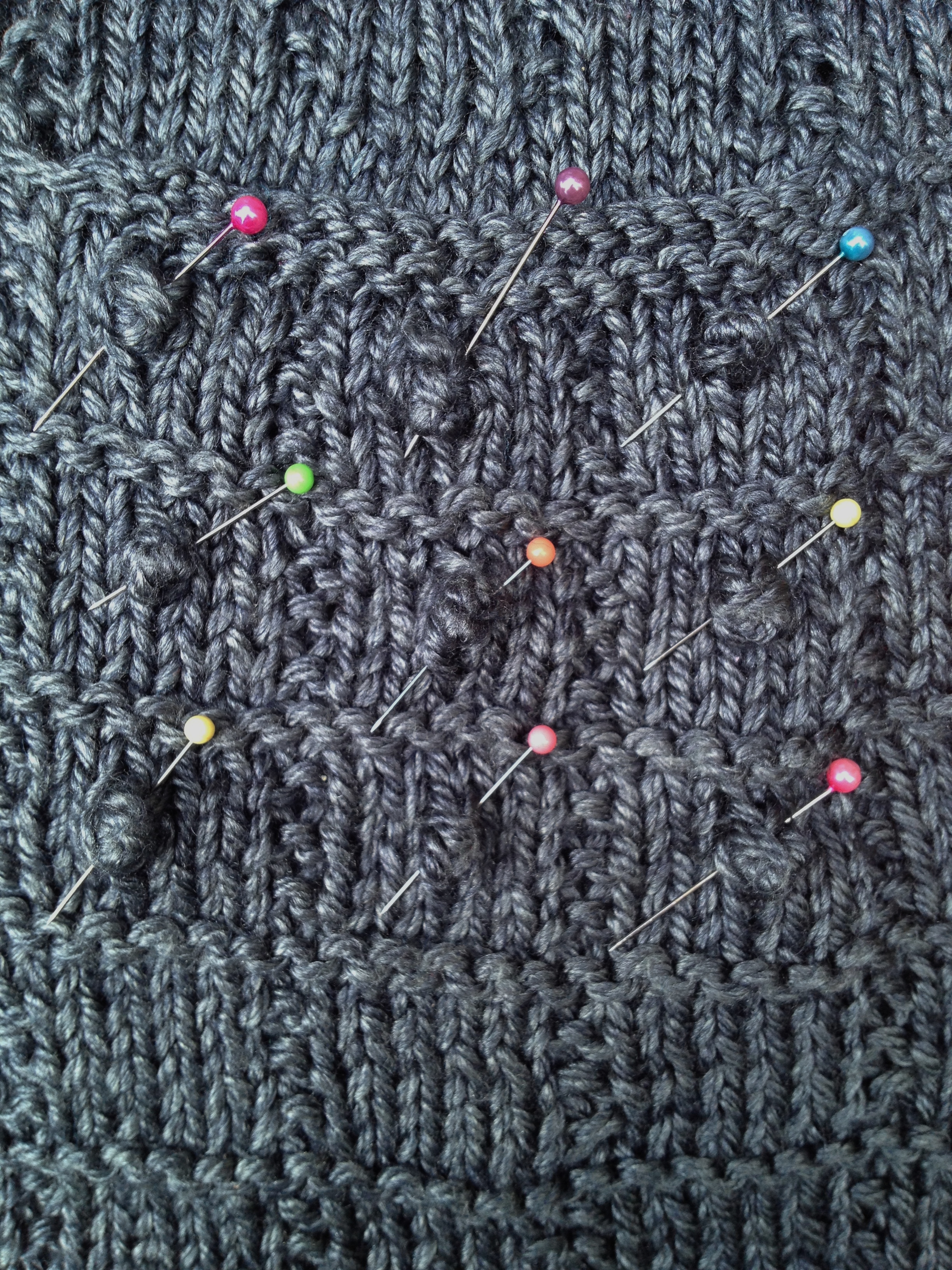
I have used the pins to ensure my bands and collar lie properly (I hope so anyway) and have inserted extra pins under each bobble on the pockets to try and make them stand proud when dry.
039

You will tend to find drying your work can take some time.  If at all possible try to leave it somewhere warm.  If using towels underneath you might find you will have to change them to prevent them from becoming smelly and in turn making your garment a little musty.

This is the method I tend to use to block my work although there are other methods.  If at all possible avoid using an iron to press your garments as this can make your stitches flatten or worse still if you’ve used acrylic, melt.  The only time I would have used an iron is if my garment had been made in 100% cotton.  Then I held the iron above the work and used the steam from it to help set the garment.  If you’re in a rush you can pin the garment out first, spritz with water from a plant spray and leave to dry.

Please Note:- Be careful when blocking rib, I know one person who stretched her stitches so tightly that when dry the rib was completely flat.  Remember you are trying to enhance your work.

If you haven’t tried it before why not block your next project to see the difference.

Happy knitting!
Truly Scrumptious

Truly Scrumptious Yarn from Fyberspates

After my blogging procrastination of late it should come as no surprise that I have had loads of ideas for posts but very little time.

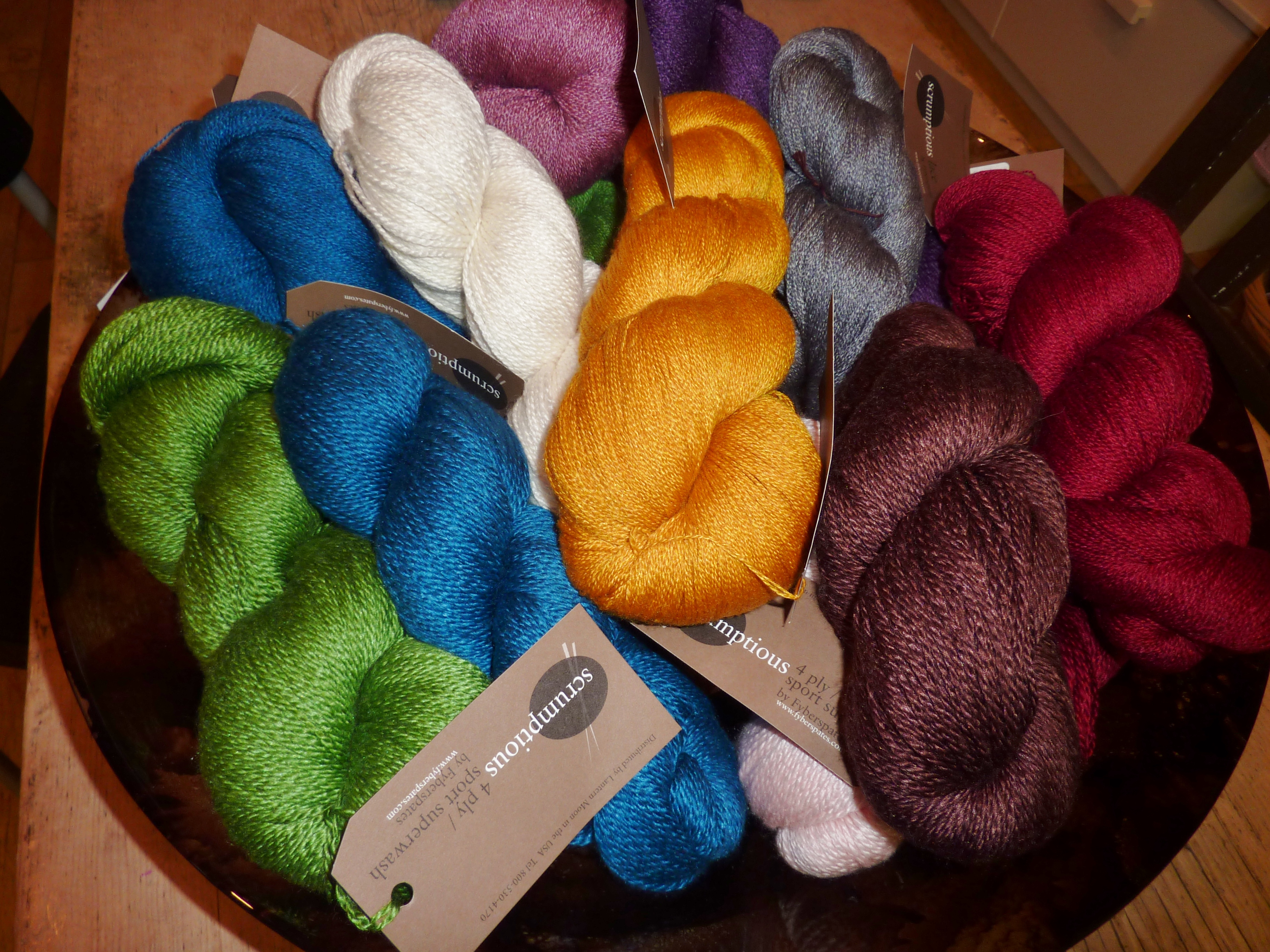
I must however, tell you all about the lovely lace weight and 4ply  yarn that came in from Fyberspates.  It’s been on display in the shop for a fortnight now but I kept forgetting to take photos or the light wasn’t great.  Sweeping all of this to one side here it is.

Jens Green, Treacle Toffee, Rose Pink & Slate Lace
Teal, Gold, Purple & Cherry Lace

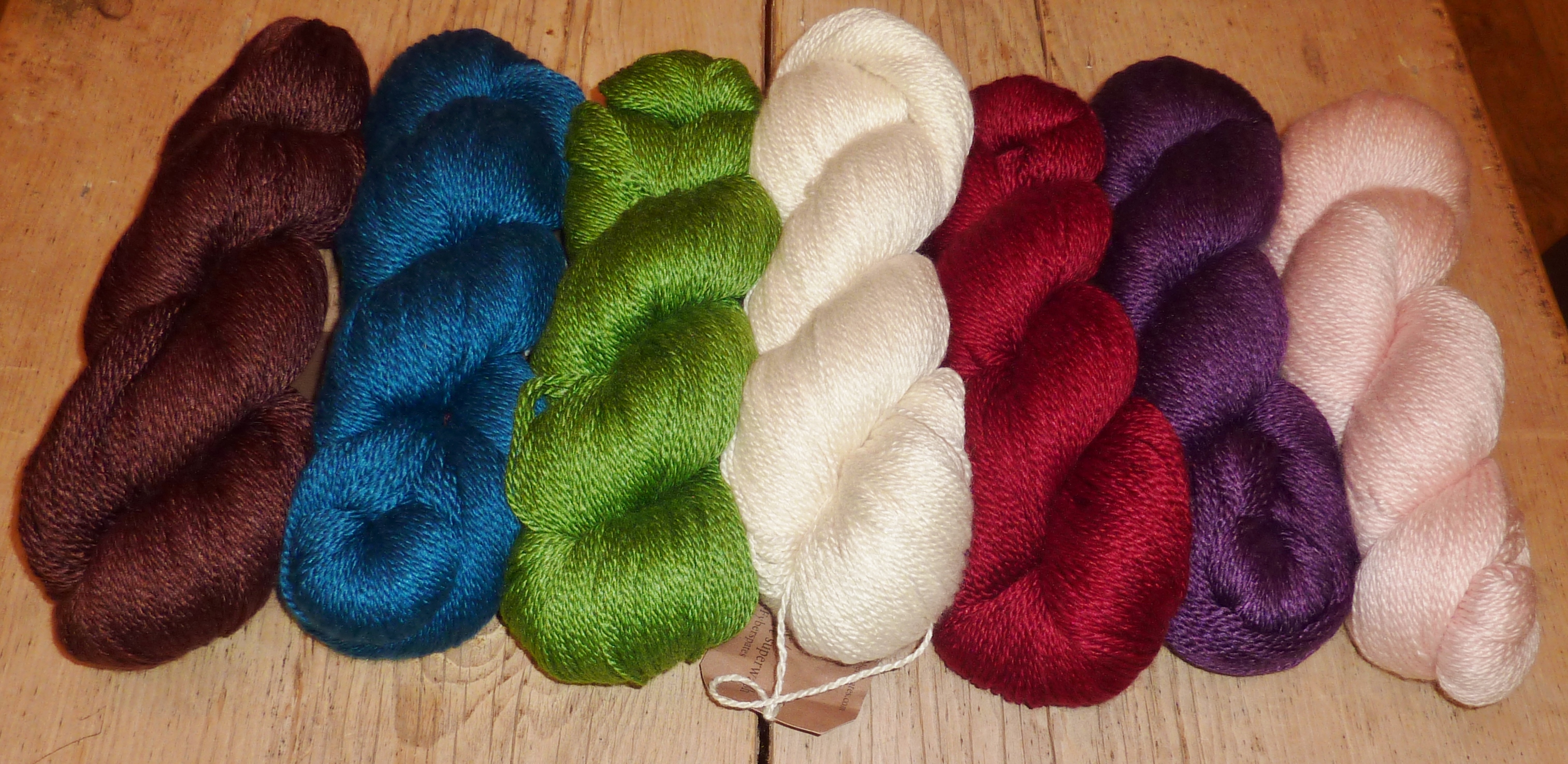
Made from 45% silk & 55% Merino the lace has 1000m per 100g hank and the 4ply/sport has 365m per 100g hank and both completely live up to their name and who doesn’t like a little luxury?

Deep Chestnut, Teal, Jens Green, Natural, Cherry, Purple & Baby Pink 4ply

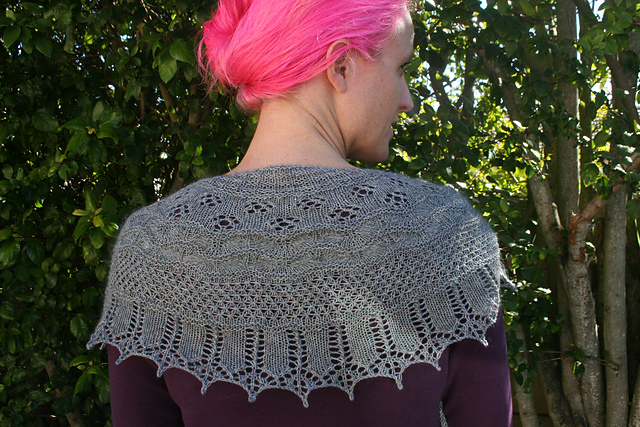
There are books and patterns from Fyberspates too and both yarns work as fantastic substitutes,.  I’m actually planning on knitting my Winter is coming Shawl in the gorgeous Deep Chestnut 4ply for the Knitguard KAL on Ravelry.

http://www.ravelry.com/patterns/library/winter-is-coming-shawl

Winter is Coming Shawl by Sally Cameron

I’ve also knitted Childry by Elly Doyle but will have to take a photo and post it up here for you to see. http://www.ravelry.com/patterns/library/childry

Happy Knitting!

If You Love Knitting………

In an effort to try and publish posts a little more regularly I have written myself a list of the knitting things that interest me.  I subscribe to quite a number of different knitting newsletters but find a few in particular are my favourites.

In this post I’d like to talk about knitty.com

Knitty.com

Knitty is an online knitting magazine that publishes four times a year  in March, June, September and December.  If you sign up to their email list they’ll notify you when the latest edition is out. Occasionally an odd pattern or two are released as a ‘bonus’ and you’ll be emailed again.

Knitty is very much a magazine: there are features pages, product tests, letters from the editors, competitions and of course there’s patterns.  FREE PATTERNS

Yep, you read it correctly, the patterns are all free for individual use only.  That doesn’t mean the patterns aren’t great, on the contrary.  Some of the most well-known patterns have originally been published in knitty.

Clapotis by Kate Gilbert

http://knitty.com/ISSUEfall04/PATTclapotis.html

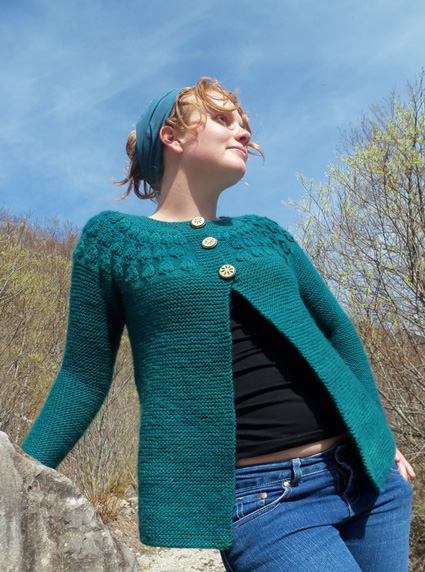
One of my favourite patterns, as I think I’ve mentioned before,  is In Leaf by Avril Lang.

In Leaf Cardigan from Knitty.com

Currently, the 41st issue is out and the magazine is celebrating their 10th year.  This issue contains 4 lovely sock patterns, 2 for gloves, 3 hats, 4 shawls, 9 jumpers/cardigans, 3 of which are for men.

I think one of the sock patterns is absolutely fab.  I have to admit that I just don’t have the time to knit socks, particularly ones like these, however I can appreciate their uniqueness.

Pair-a-normal by Barry Scates

Pair-a-normal

http://www.knitty.com/ISSUEdf12/PATTpairanormal.php

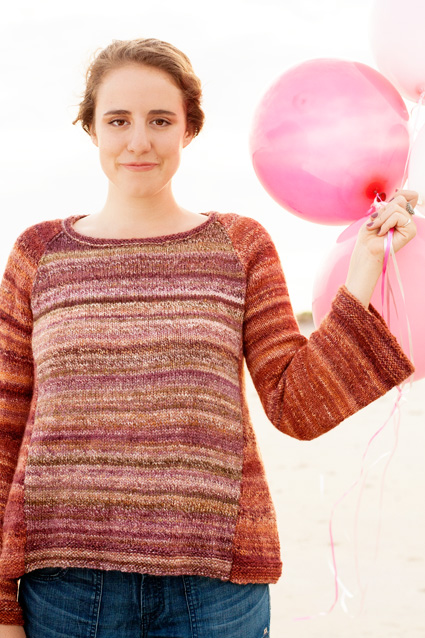
One jumper that has already been added to my ever increasing ‘to do’ list is the Party Mix Pullover by Julia Farewell-Clay.  It’s an aran weight, raglan, A-line jumper that will be great for using up some of my stash.  Even better, being an A-line design it will help to hide a multitude of sins (mostly of the cake kind).

Party Mix pullover

http://www.knitty.com/ISSUEdf12/KSPATTpartymix.php

I find the Cool Stuff section where books, classes, etc are reviewed particularly interesting being a keen collector of all things knitting.  For me this issue the most interesting items have been the reviews of several books I am keen to own including November Knits and the Knitters Handy Book of Top Down Sweater Designs.

I also like the Knitty Yarn Roundtable feature as it helps me to keep an eye on possible new yarns for the shop or what new trends are coming.

In addition to all of the above, not to mention the competition, crossword, adverts and shopping, there is also Knitty Spin, which is a section of the magazine aimed at spinners.  I do intend on learning to spin, I even have a lovely Ashford Spinning Wheel, which at present adorns the window sill at the top of my stairs (sadly).  This doesn’t stop me coveting fibre and lusting over the endless possibilities……

Knitty Spin has reviews of fibre that the testers spin and then knit, reviews of cool spinning stuff, a spinners glossary and yet more patterns.  My favourite this issue without a doubt are the beautiful mitts Calertne by Sandy Sitzman & Lynne Vogel – they are truly beautiful.

Calertne

http://www.knitty.com/ISSUEdf12/KSPATTcalertne.php

Knitty is in my opinion, without a doubt one of the best knitting related features available online

If you’re still having doubts about signing up to the knitty.com newsletter reminder – why?  Maybe this will encourage you –

Norma

http://www.knitty.com/ISSUEff12/PATTnorma.php

Norma is definitely an heirloom piece, but just look at the detail.  Meghan Jones is a truly gifted designer.

Norma Up Close

Happy knitting!

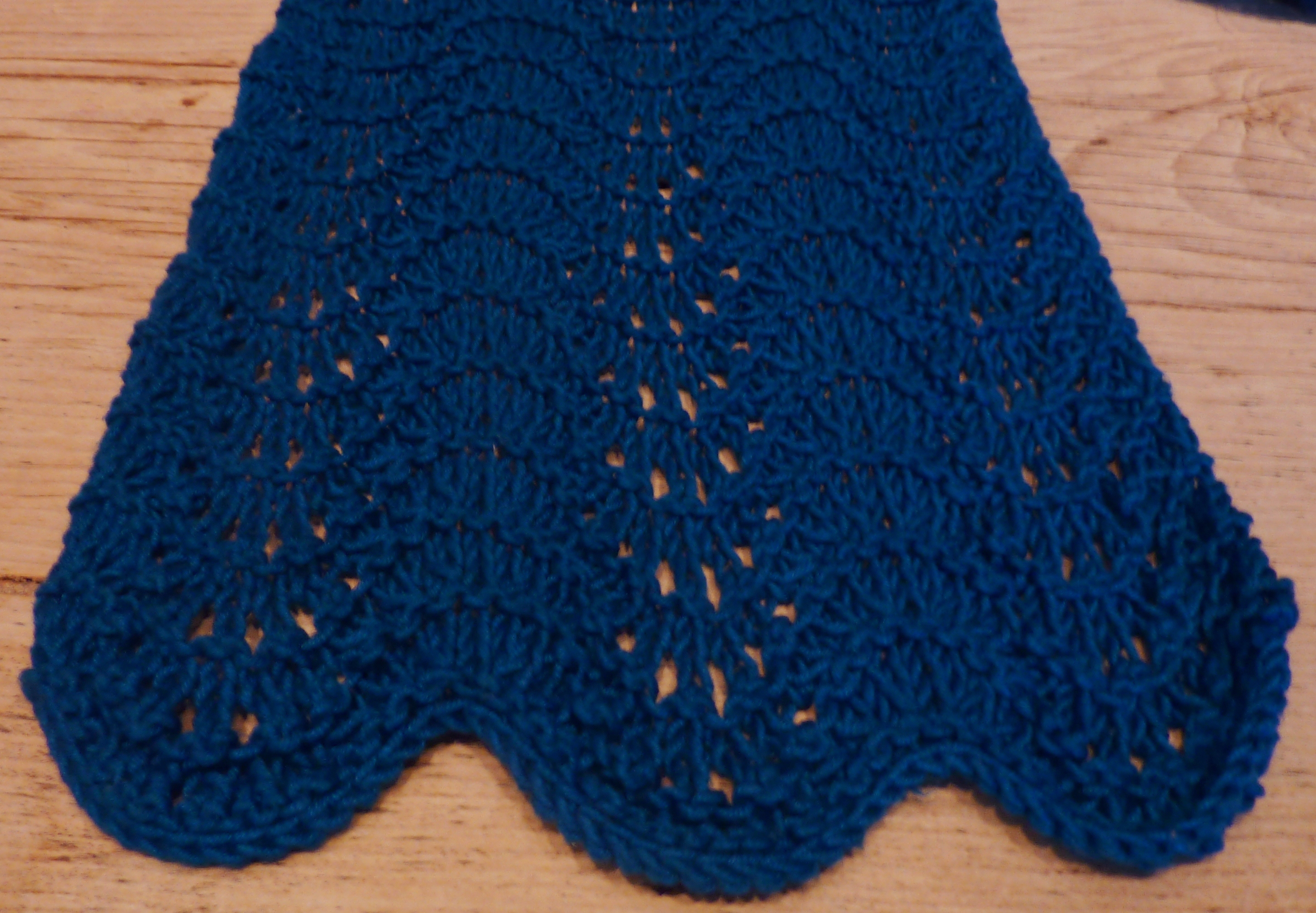
My Favourite Easy Lace Scarf

Kid Silk Old Shale Scarf

I have no idea where the time this week has run away to, I feel even more behind than usual and it’s only Monday?  Having promised to post this pattern up a good while ago now I thought I should finally try and get round to it.

I think it is one of the simplest and most effective lace scarf patterns which lends itself so well to lots of different yarns however, I think it looks prettiest in a mohair.  Rowan’s Kidsilk Haze is beautiful, but to be fair it is a little expensive.  Kid Silk from Austermann is the same great yarn but a little kinder on our ever-suffering pockets.

You Will Need

1 Ball of Austermann Kid Silk

5mm Needles

Darning Needle

Scarf Dimensions (unblocked)

Length 140cm/55″

Width 20cm/7.9″

Tension

There’s no specific tension for this piece – you want it to be looser than you would usually work the yarn.  For example if you’re working with a double knit and your tension is usually 22sts on 4mm (average) you would need 5mm’s.  The Kid Silk has a ‘haze’ which means it will hold much more than some other yarns, allowing you to use much larger needles than you would do normally.

I have a friend who makes this same scarf but on 8mm’s and it looks really pretty so you can experiment with your needle sizes.

Abbreviations

k – knit

p – purl

st(s) – stitch(es)

ws – wrong side

y0 – yarn over

k2tog – knit the next 2 stitches together

Pattern

Cast on 40sts loosely and work 4 rows in plain knit, this creates the garter stitch border.

The garter stitch border

1st Row – Knit

2nd Row – Purl

3rd Row – Knit the first 2 stitches, (K2tog) x 3, (yo, k1) x 6, (k2tog) x 6, (yo, K1) x6, (k2tog) x3, knit last 2 stitches.

4th Row – Knit

These 4 rows form the pattern work until scarf reaches your chosen length, remembering to leave enough yarn to knit the 4 rows of plain stitch at the end of your scarf.

Cast off loosely and sew in ends.

The garter stitch edge

By knitting the first and the last 2 stitches on every row the garter stitch border runs the whole way round the scarf.

Block if desired.

As I already mentioned I love this pattern and one of my favourite scarves was made for me by my good friend Sandra.  She used exactly the same pattern but knitted with Rico Essentials Cotton DK.

Old Shale Scarf in Rico’s Essential Cotton DK

This version was knitted in Baby Alpaca by King Cole.

Baby Alpaca from King Cole

Have a play with different weights of yarn remembering to keep your needles at least 1 size larger than the size given for the yarn.  We’d love for you to post pictures of your finished scarves up on the Facebook page www.knitinmidleton.com

Happy Knitting!

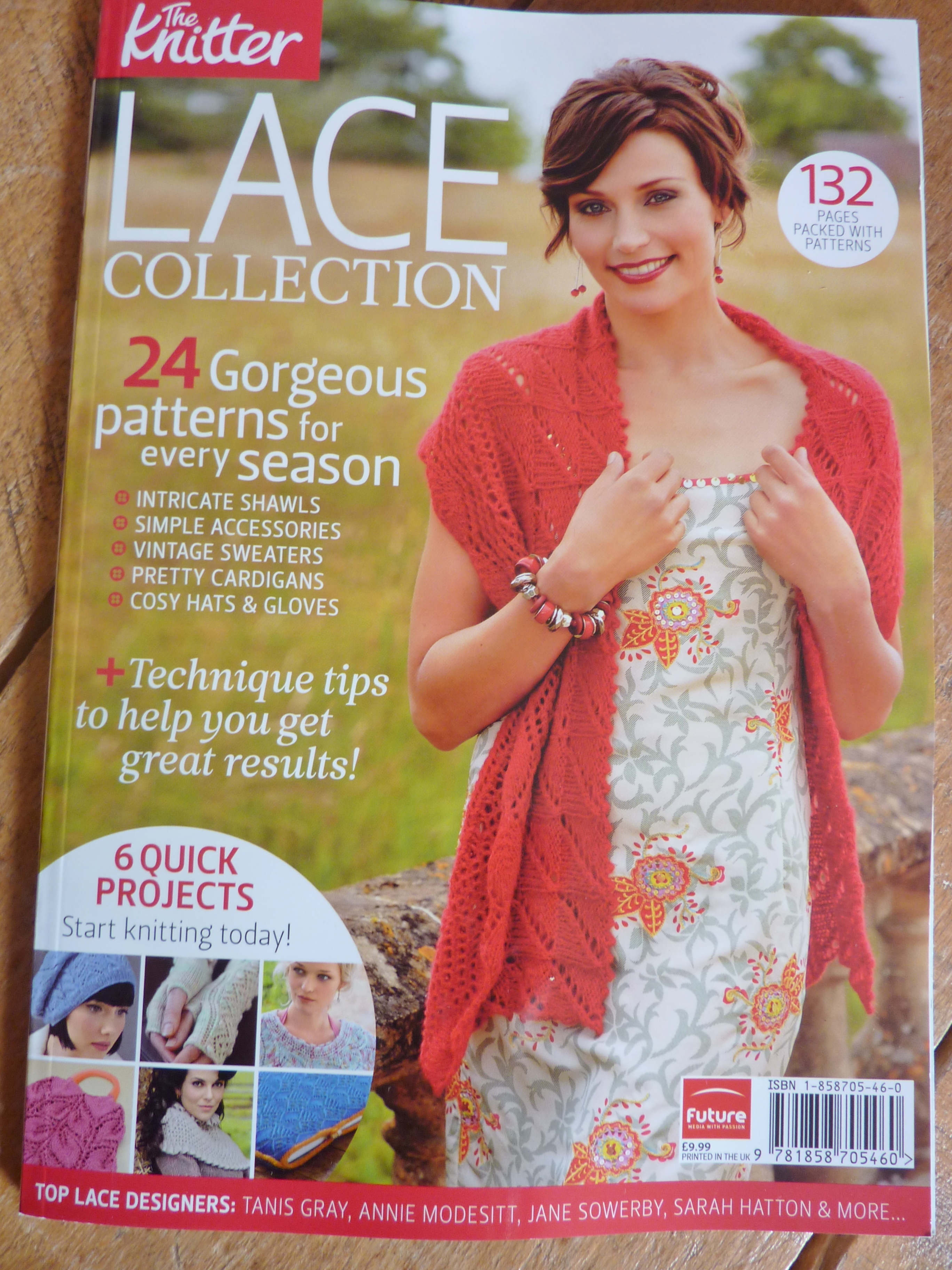
The Knitter: Lace Collection

The Knitter Lace Collection

I thought this special edition of The Knitter would be the best way to kick off looking at the various different knitting and crochet magazines that are available to buy.  At present (to my knowledge) there are six different UK publications for knitting and one for crochet, including:

Simply Knitting

Knitting

Yarnwise (formerly Knit and before that Yarn Forward)

Let’s Knit

Knit Today

The Knitter

Inside Crochet – title speaks for itself methinks

All of the magazines have something to offer and what works for one knitter might not be what another wants from a magazine.  They all typically contain approximately 10 patterns and tend  to have a similar format of: letters to the expert, a rundown on certain yarns and a look at ‘what’s new’ in the world of woolliness.  Some of them will have an interview with a designer or perhaps a shop owner or knitting group organiser.

The Knitter is one of my personal favourites and since January 2009 when the first issue came out I haven’t missed an issue.  The magazine is aimed at the intermediate to experienced knitter or for those that want to take their knitting a little further.  The patterns are at first glance a little more intricate but  the magazine includes both written and charted instructions.

Back to the Lace Collection – This ‘special’, as the cover highlights, contains 24 gorgeous patterns for every season.  Sadly, for me, they have all been in previous issues. However it does present them all in one handy publication.  In addition, if you’re new to The Knitter or missed several issues, the collection would be a good addition to library.

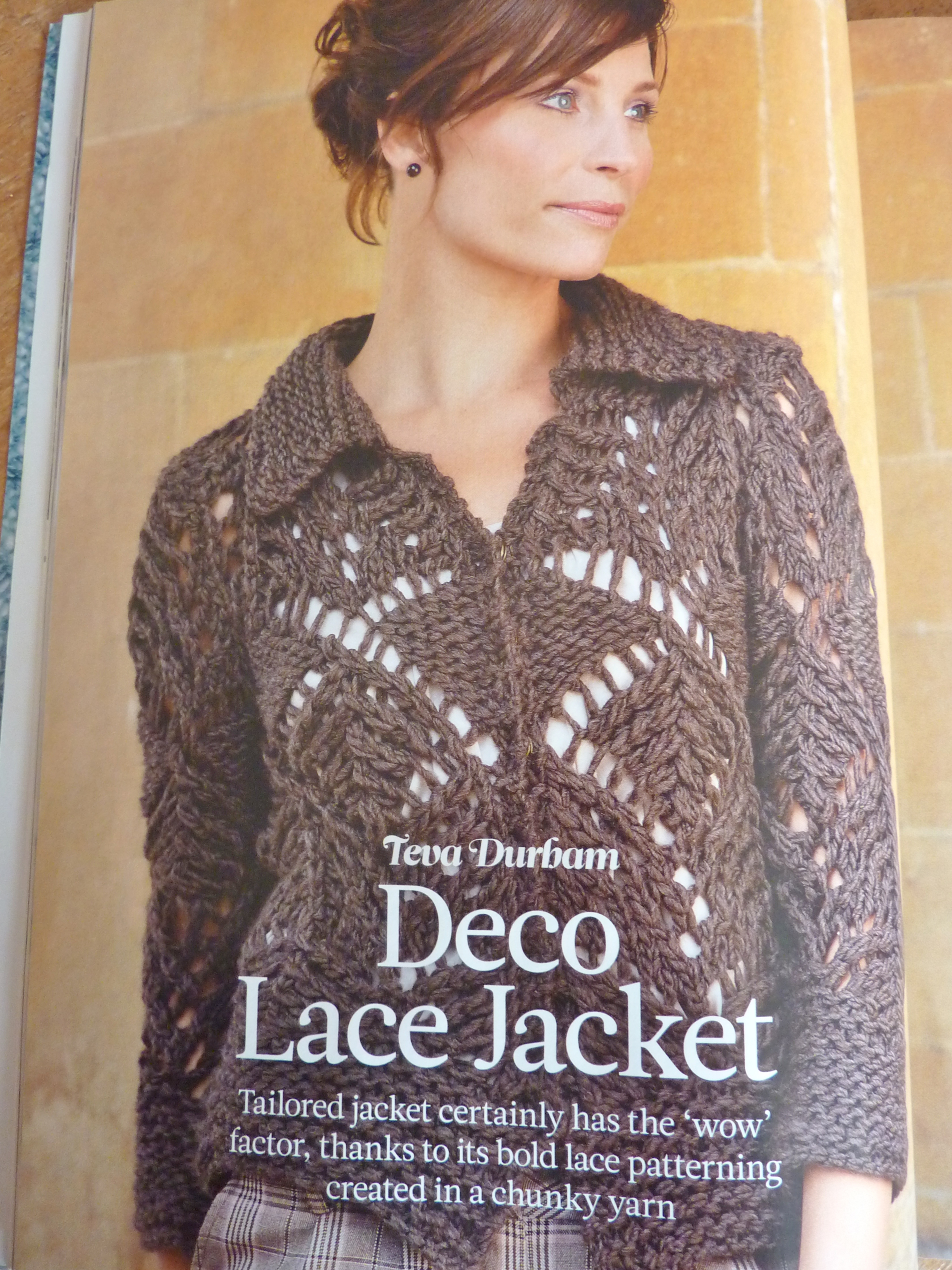
Of the patterns inside, some of my particular favourites are the Deco Lace Jacket by Teva Durham.

Rather unusually the lace jacket is knitted in a super chunky on 9mm.  The design was originally in issue 22 from August 2010.

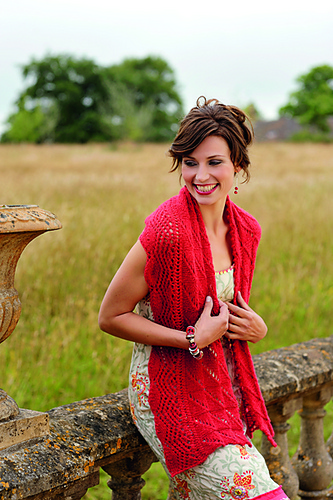
I’d also previously added the Mulligan Stole by Tanis Gray to my ‘to do’ list as I think it’s truly beautiful and very wearable.

It’s made in double knit using a 4.5mm needle and was previously in issue 23.

Elwood Hat

The Elwood hat by Kirstie McLeod combines cables and lace in a beautiful 4ply hat and takes approximately 360 meters of yarn.  Elwood was originally published in issue 16 in February 2010.

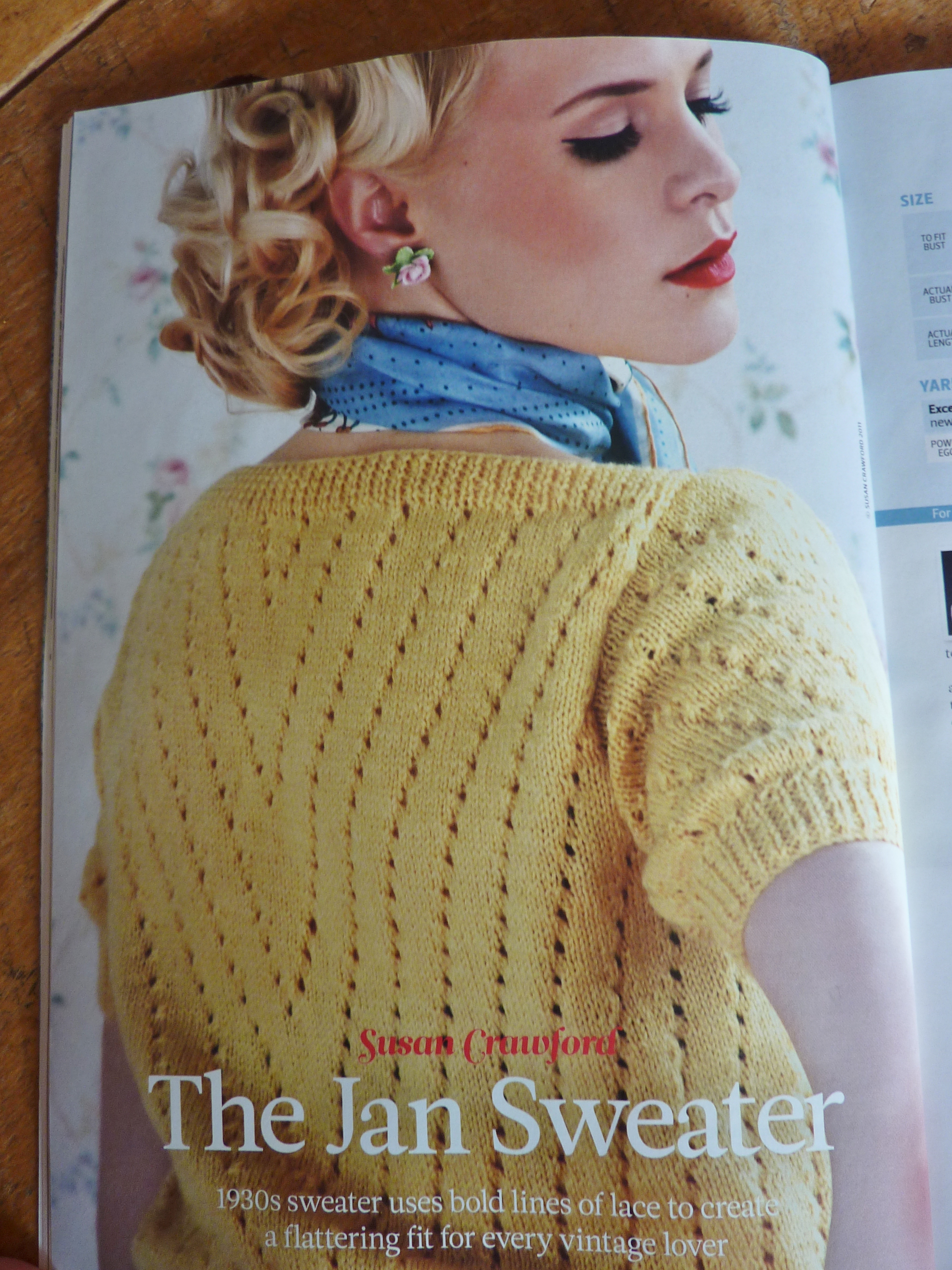
Jan Sweater

Lastly, I absolutely adore Susan Crawford’s Jan Sweater. It appeared as a supplement in issue 32 but originally appears in Susan’s book ‘A Stitch in Time : Vintage Knitting Patterns 1930 – 1959, Volume 2’.  I think the boat neck and the way the lace pattern forms an increasing V is simply stunning. Truly vintage.

The Lace Collection contains a review of six lace knitting books and a Who’s Who of lace designers, which gives the reader a little insight into the best lace talent from around the world.  There is also a great masterclass by Jane Crowfoot on  how to create flawless lacework, which gives you tips on avoiding and correcting mistakes too.  I have to admit to loving the showcase review of 24 different lace weight yarns available; it’s a great resource for me when it comes to shopping for stock for the shop.

Personally I love knitting lace but I’d be the first to say it can be time consuming and usually requires more attention than other patterns.  I know many accomplished knitters that can knit cables with their eyes closed, but actively avoid knitting lace.

One of the easiest and most lovely of all lace patterns is Old Shale. It works great in most weights of yarn and it’s a four row pattern, with only one of those containing any yarn overs and working stitches together.  I shall pop a pattern and some examples up here in the near future.

In the meantime  I’d recommend The Knitter Lace Collection to anyone that wants to try lace or would like to go a little further with lace.  However, if, like me, you already have the magazines, maybe you should consider whether the €15.12 I paid for my copy in Eason might be better spent on a different knitting book?